Top Solutions to Boost Your Website Rankings
##Introductions
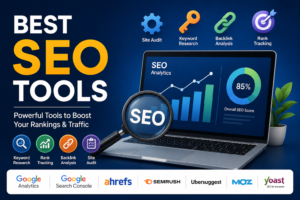
In today’s digital world, ranking on search engines like Google is essential for online success. Whether you’re a blogger, business owner, or digital marketer, using the **best SEO tools** can significantly improve your website’s visibility, traffic, and performance. These tools help you analyze data, find keywords, track rankings, and optimize your content effectively.
## What Are SEO Tools?
SEO tools are software or platforms designed to help you improve your website’s performance on search engines. They provide insights into keywords, backlinks, competitors, technical issues, and more, enabling you to make data-driven decisions.
## Why You Need SEO Tools
Using SEO tools offers several benefits:
* **Better Keyword Research**
* **Improved Website Performance**
* **Competitor Analysis**
* **Higher Search Rankings**
* **Time-Saving Automation**
## Best SEO Tools in 2026
### 1. Google Analytics
Google Analytics is a free and powerful tool that helps you track website traffic, user behavior, and conversions. It gives deep insights into how visitors interact with your site.
**Key Features:**
* Traffic analysis
* Audience insights
* Conversion tracking
### 2. Google Search Console
This tool helps you monitor your website’s presence in Google search results. It identifies indexing issues and keyword performance.
**Key Features:**
* Search performance reports
* Index coverage
* Mobile usability insights
### 3. Ahrefs
Ahrefs is one of the most popular SEO tools for backlink analysis and keyword research. It’s widely used by professionals for competitor analysis.
**Key Features:**
* Backlink checker
* Keyword explorer
* Site audit
### 4. SEMrush
SEMrush is an all-in-one digital marketing tool that offers SEO, PPC, and content marketing features.
**Key Features:**
* Keyword research
* Competitor analysis
* Site audit tools
### 5. Ubersuggest
Ubersuggest is a beginner-friendly SEO tool that provides keyword ideas, SEO audits, and traffic data.
**Key Features:**
* Keyword suggestions
* SEO audit reports
* Content ideas
### 6. Moz Pro
Moz Pro is a reliable SEO platform that helps with keyword tracking, link building, and site audits.
**Key Features:**
* Rank tracking
* Domain authority analysis
* On-page optimization
### 7. Yoast SEO (WordPress Plugin)
Yoast SEO is perfect for WordPress users. It helps optimize content for search engines directly within your website.
**Key Features:**
* Content readability analysis
* Keyword optimization
* XML sitemap generation
### 8. Screaming Frog SEO Spider
This tool is great for technical SEO audits. It crawls your website to identify errors and issues.
**Key Features:**
* Broken link detection
* Site structure analysis
* Technical SEO audit
## How to Choose the Best SEO Tool
When selecting an SEO tool, consider:
* Your budget (free vs paid tools)
* Your experience level (beginner or advanced)
* Features you need (keywords, backlinks, audits)
* Ease of use
- Google Search Central – https://developers.google.com/search
- Google Search Console – https://search.google.com/search-console
- Ahrefs – https://ahrefs.com
- Semrush – https://www.semrush.com
- Moz – https://moz.com
- Screaming Frog – https://www.screamingfrog.co.uk/seo-spider/
## Best Free vs Paid SEO Tools
**Free Tools:**
* Google Analytics
* Google Search Console
* Ubersuggest (limited version)
**Paid Tools:**
* Ahrefs
* SEMrush
* Moz Pro
Paid tools offer more advanced features and detailed data, while free tools are great for beginners.
## Tips for Using SEO Tools Effectively
* Combine multiple tools for better insights
* Focus on high-quality keywords
* Regularly audit your website
* Track your competitors
* Update your SEO strategy based on data
## Common Mistakes to Avoid
* Relying on one tool only
* Ignoring data insights
* Not updating strategies
* Overusing keywords
##
Using the **best SEO tools** is essential for improving your website’s performance and achieving higher rankings on search engines. Whether you choose free tools like Google Analytics or premium platforms like Ahrefs and SEMrush, the key is to use them strategically.
Investing in the right SEO tools can help you stay ahead of your competitors and grow your online presence effectively.